
Commercial washrooms have to work hard every day. They need to look clean, feel well finished and stand up to constant use without becoming difficult to maintain.
Professional tiling plays a major part in that. The right tiles, preparation, setting out and installation detail can improve how a washroom performs, how it is cleaned and how confidently it supports the wider building.
Why washroom tiling needs more than a neat finish
A commercial washroom is not judged only by how it looks on the day it is handed over. It is judged by how it performs after repeated cleaning, busy foot traffic, changing moisture levels and regular use by staff, customers, tenants, pupils, residents or visitors.
That is why professional tiling in this environment needs to consider far more than the tile face. The substrate, falls, adhesives, grout, trims, junctions, sealant and access points all influence the finished result. When these details are handled properly, the space feels more considered and is easier to keep in good condition.
Good washroom tiling also helps create a consistent standard across cubicles, vanity areas, splash zones, cleaner points and circulation areas. Even small variations in tile alignment, cuts around fixtures or grout lines can make a room feel unfinished. In commercial settings, those details are noticed because the space is used so often.
For broader context on how commercial site demands differ from domestic projects, Maher Tiling has also covered what changes between commercial and residential tiling.
Finish quality shapes how the space is perceived

Washrooms are practical spaces, but they still influence how people feel about a building. A clean, straight and carefully finished tiled surface gives the impression that the wider premises are well looked after. Poor setting out, awkward cuts or untidy junctions can have the opposite effect, even if the room is technically usable.
Professional installers plan the layout before tiles go down. This includes checking where cuts will fall, how tiles will meet at corners, how the pattern will relate to basins and cubicles, and whether visual lines will remain balanced across the room. This planning stage is especially important in commercial washrooms because there may be several repeated details across multiple walls or rooms.
Finish quality also depends on how movement, edges and transitions are handled. Trims should look purposeful, sealant should be cleanly applied and grout lines should be consistent. Around sanitaryware, access panels, drainage points and partitions, the workmanship needs to look precise while still allowing the washroom to function properly.
A professional finish does not have to mean an overly decorative design. In many commercial washrooms, the best result is a calm, robust and easy to clean surface that looks tidy year after year.
Durability starts before the tiles are fixed

Durability is often discussed in terms of tile choice, but the installation beneath the surface is just as important. Commercial washrooms are exposed to moisture, cleaning products, impact risk and repeated use. If the background preparation is poor, even a good tile can fail to perform as expected.
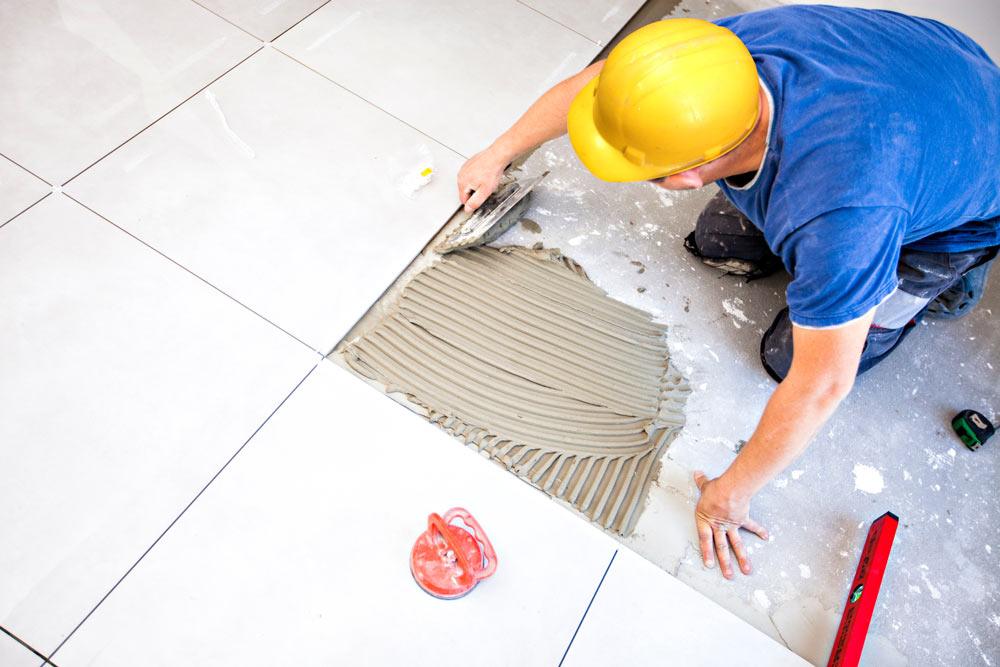
Professional tiling contractors assess the surface before installation begins. They look at whether walls and floors are sound, level, suitable for the selected tile and ready for the correct adhesive system. In wet or regularly cleaned areas, preparation may also need to account for water resistance and movement.
The grout and adhesive specification matters too. A busy washroom may need products selected for moisture exposure, cleaning routines and the expected level of wear. The goal is to create a tiled system that works together, rather than treating each product as a separate choice.
This is one reason cheap decisions can become poor value over time. Maher Tiling explores that principle in more detail in its guide to why cheap tiles can cost more in commercial settings.
Tile suitability matters in wet and busy environments

Not every tile is right for a commercial washroom. The best choice depends on where it will be installed, how the area will be used and how it will be cleaned. Wall tiles, floor tiles, splashback areas and circulation routes may each need different performance qualities.
Floor tiles need particular care. They should be suitable for foot traffic and appropriate for areas where water may be present. The surface should support practical use without making cleaning unnecessarily difficult. Very textured finishes can help in some settings, but they can also hold dirt if they are not chosen carefully.
Wall tiles are often selected for cleanability, impact resistance and appearance. Larger formats can reduce grout lines, while smaller formats may help with falls, curves or detailed areas. Neither is automatically better. The right answer depends on the washroom design and the condition of the background.
Colour, pattern and finish should also be chosen with maintenance in mind. A commercial washroom needs to look presentable between cleaning cycles, so the tile should support hygiene routines rather than fight against them.
For related guidance on material decisions in demanding shared settings, see Maher Tiling’s article on choosing tiles for shared kitchens and bathrooms.
Professional installation supports easier maintenance
A well tiled washroom is easier for facilities teams to manage. Smooth lines, suitable grout, neat junctions and well sealed edges all reduce the number of awkward areas where dirt and moisture can collect.
Maintenance is not only about cleaning. It also includes how easy it is to identify wear, access service points and deal with small issues before they spread. Professional tiling takes these practical needs into account during installation, especially around pipework, vanity units, cubicle divisions and thresholds.
Good installers also understand that commercial washrooms often need consistency across multiple rooms or phases. Matching setting out, grout colour, tile batches and finishing details helps the finished project feel coherent. This matters in workplaces, leisure venues, education settings, healthcare environments, hospitality spaces and managed buildings where users move between different washroom areas.
The same thinking applies to other demanding commercial spaces. Maher Tiling covers similar durability considerations in its guide to commercial tiling for busy areas.
Good planning reduces disruption during the project

Commercial washroom projects usually need careful coordination. Tiling may have to work around plumbing, partitions, lighting, ventilation, flooring, decoration and access requirements. A professional approach helps keep the work organised and helps other trades understand what is needed before each stage begins.
Planning also improves the quality of the finished installation. When tile sizes, falls, fixtures and access panels are considered early, there is less chance of awkward cuts or rushed decisions later. This is especially useful where several washrooms need to follow the same design standard.
Communication is part of the job. A good commercial tiling contractor will raise practical considerations before they become site problems. That might include substrate readiness, curing times, product compatibility or the best order of work around other trades.
The result is not just a better tiled surface. It is a washroom that has been approached as a complete working environment, with durability, hygiene, appearance and everyday use all considered together.
- Professional tiling improves both the appearance and performance of commercial washrooms.
- Durability depends on preparation, product choice and installation detail, not tile choice alone.
- Suitable tiles help support hygiene, cleanability and everyday use in wet and busy areas.
- Consistent setting out and finishing details create a more polished result across multiple washrooms.
- Early planning helps the tiling work fit smoothly around other trades and building requirements.
Frequently asked questions
What makes commercial washroom tiling different from domestic bathroom tiling?
Commercial washrooms are usually used more often and cleaned more regularly, so the tiling needs to account for heavier wear, moisture exposure, hygiene standards and coordination with other trades.
Are large tiles suitable for commercial washrooms?
They can be, depending on the design, background condition and floor or wall area. Large tiles can reduce grout lines, but they must be specified and installed correctly for the space.
Why is grout choice important in a washroom?
Grout affects appearance, hygiene and maintenance. In commercial washrooms, it should be chosen with moisture, cleaning routines and expected use in mind.
Can professional tiling help reduce future maintenance issues?
Yes. Careful preparation, suitable materials, neat junctions and correct sealing can make surfaces easier to clean and help reduce avoidable wear or failure.
Planning a commercial washroom project?
Maher Tiling can help with professional, practical tiling work for commercial washroom environments. Get in touch to discuss the finish, durability and specification your project needs.